Your Cart is Empty


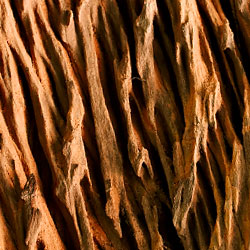
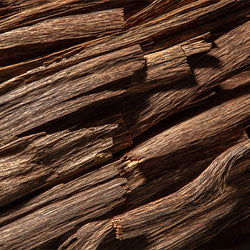
The arrival of Ranjatai (蘭奢待), the most famous piece of fragrant wood in the incense world, is the stuff of legend in Japan, appropriately documented in the second-oldest written record of Japanese history, the Nihon Shoki (日本書紀, Chronicles of Japan). Said to have divinely washed up upon the shores of Awaji Island in 595 CE, Ranjatai was instead most likely presented several decades prior as a tribute gift from the the Kingdoms of Korea along with the introduction of Buddhism to Japan, and was originally known as "Ōjuku-kō" (黄熟香), or "yellow ripe incense," a utilitarian description of the fragrant wood's earthy ochre appearance. One of the more than 600 treasures presented to the Great Buddha at Tōdai-ji (東大寺) in 756 CE to honor the passing of the temple's founder, Emperor Shōmu, it is said that originally Ōjuku-kō was to be ceremonially renamed to the more auspicious "Tōdai-ji" in the late Emperor's honor. But given the nature of incense for burning, this was deemed inauspicious. Instead, Ōjuku-kō was given the ceremonial name Ranjatai, with the kanji for Tōdai-ji obscured within Ranjatai’s name. More than 1,200 year later, Ranjatai is still carefully preserved in the Shōsō-in Treasure Repository at Tōdai-ji under the conservancy of the Imperial Household Agency. Put on public exhibition by the Nara National Museum only every ten to fifteen years, Ranjatai draws thousands eager to view it. It is with this historical context that Shunkohdo has created their own version of Ranjatai in an homage to the most famous incense in all of Japan.
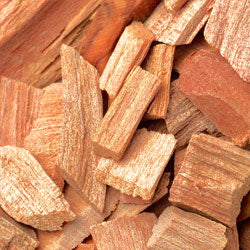
Part of Shunkohdo's Luxury Line of fine fragrances, Ranjatai is described as a luxurious blend of premium Vietnamese aloeswood and rare natural musk. Made with only natural ingredients, Shunkohdo has created an incense that, like the historical Ranjatai, will age superbly, growing more mellow and deep with and passage of time. By blending the fragrant beauty of such rare ingredients as natural musk and Vietnamese Aloeswood, both considerably more valuable than gold, Shunkohdo's Ranjatai seeks to be worthy of burning in the kōrō of an Emperor.
Ranjatai's moss brown stick is ancient feeling, with reserved tones of leather and ancient wood. The stick has a dense rich greenness, rich and earthy, like the forest floor covered with moss. Within this float subtle notes of sweetness, hints of spice, and an animalistic notes like the coat of a dog fresh from the groomer. Taken together, Ranjatai's stick is rich, dark, and complex, with an earthy woody quality of great age and depth. It's probably one of the most complex stick notes we've ever experienced.
Once the ember has been set aglow, Ranjatai begins with a burst of lush woody sweetness that is amazingly beautiful. Filled with notes mixing dry floral and fruity tones with a soft aloeswood sweetness, Ranjatai is instantly addicting. Shortly after, the woody-floral sweetness develops an almost savory quality to it most likely from the natural musk - not quite salty but somewhat spicy gourmand - making Ranjatai's top notes all the more addicting. With time an additional subtle aloeswsood bitterness develops as a counterpoint to the woody-floral top note as well, adding elegant depth and foundation to the more ethereal sweeter notes to soar over. All together, Ranjatai presents as beautifully complex, luxurious, and full of richness.
As the burn progress, Ranjatai continue to deepen in complexity, adding new notes subtly around the edges of perception that enhance its rich woody sweetness. A soft woody coolness akin to a balsamic borneol adds a transparency and calm, yet remains in the background like history in fragrant form. Notes of toasted caramel and cinnamon add a warmth to the woody-floral top note, broadening the relaxed confidence of Ranjatai's fragrance. The featured natural musk is marvelous, adding a soft, earthy, powdery warm floral sweetness that is amazingly addictive and enhances the floral sweetness of its aloeswood base.
With time, Ranjatai becomes lighter, transparent, ethereal. The fragrant space it creates is warming, calming, and very relaxing. It is in a rare class in that Ranjatai creates a profound affect upon one's mood, providing a sense of peace and tranquility that is an uncommon find even among many outstanding Japanese fragrances available. By the end of the stick, the listener is left within a redolent bubble of light woody-floral sweetness with a comforting warmth and expanding camphor-like cool exterior, the surrounding space transformed.
As the burn completes, Ranjatai's after-note continues to expand, becoming even more transparent. The cool spiciness of the burn moves to the fore, becoming light and airy with a prominent camphor note. Yet the rich floral-woody sweetness remains, only now more translucent, softer, and as an elegant counterpoint. As time passes, the after-note takes on a more woody, spicy-salty tone, rounding out its sweetness with a savory woodiness. Ranjatai's after note is excellent, with a long lasting fragrance that is a joy to return to even several hours after the stick has been consumed.
In May 2022, the Shino School of Kōdō held an incense ceremony to honor the spirit of Japan's third great unifier, Tokugawa Ieyasu, using the most precious fragrant wood in existence: a piece of Ranjatai. Most of us in the incense world will never have such a once in a lifetime experience as listening to the sublime fragrance of a National Treasure of Japan. However, in the realm of the possible, Shunkohdo Ranjatai provides an outstanding listening experience with a fragrance that is marvelously complex, beautifully musky sweet, and filled with a rich aloeswood note of magnificent depth. If the historical Ranjatai serves as the model Shunkohdo's excellent homage, it must indeed be something truly exquisite.
Robins outside my window
heralding spring's return,
while my incense defies time's passing.

Shunkohdo Ranjatai is available in the following size:
125-stick box
****
Ranjatai is woven throughout the history of the Japanese art of incense as highlighted in the book: The Fragrant Path: A Guide to the Japanese Art of Incense. Filled with practical suggestions, useful tips, and an exploration of the history, selection, use, and appreciation of this uniquely Japanese art form, The Fragrant Path offers a rare, comprehensive look into the Japanese art of incense in the first in-depth English-language book on the subject in nearly three decades.