Your Cart is Empty


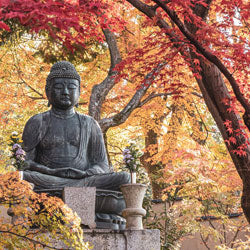
As a means of describing the indescribable, Zen, poetry, and incense have long gone hand in hand in Japan. Placing an importance on intuitive transmission of indescribable wisdom dates to the Flower Sermon of the Buddha. In it, the Buddha held up a single lotus blossom to which one of his disciples smiled, intuitively understanding the teaching. Seeing this smile, the Buddha taught that enlightenment did not reside in words or letters, but instead involved a special transmission outside the scriptures. Even though Zen viewed the description of its precepts in writing as equivalent to grasping at smoke, waka poetry was able to create subtle and intuitive understandings in ways that mirrored the flashes of insight Zen sought to spark. Zen masters like Mugaku Sogen (1226 - 1286), the founder of Engaku-ji in Kamakura, and Eihei Dogen (1200 - 1253), the founder of the Sōtō school of Zen, often used poetry to describe the indescribable. Much like poetry, Zen also promoted the use of incense as the perception of fragrance mirrored the difficulty of putting into words Zen’s intuitive teachings. As fragrance is often intuitively perceived, just as is the mysterious flashes of enlightenment experienced through Zen's teachings, a closely interwoven relationship between Zen, incense, and poetry was as intuitive as its indescribable teachings. Blending both poetry and fragrance, Kito Tenkundo presents Oimatsu through just such an intuitive experience of the indescribable.
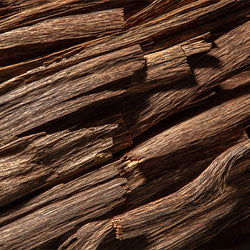
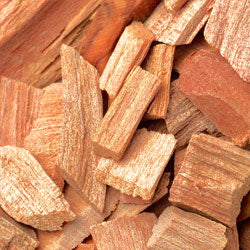
Part of Kito Tenkundo's Kamakura Go Koboku (Kamakura Five Fragrance Woods), Oimatsu (Old Pine) is a luxurious traditional incense created from the finest aloeswood. As this house based in the ancient samurai capital of Kamakura often does, Kito Tenkundo describes Oimatsu more poetically than literally: "Standing on the hills overlooking Kamakura, ancient pines have watched over the city’s prosperous history for centuries. Like the sound of temple bells tolling through their branches, Oimatsu’s deep and mysterious aloeswood fragrance penetrates the soul, its indescribable fragrance nurtured by the eternal workings of nature." Oimatsu is clearly created to be perceived poetically and intuitively as much as directly through its fragrance.
Oimatsu's unlit taupe stick is spicy, with subtle green notes mixed with hints of honey and citrus effervescence. There is an ancient quality to its sweetness, with tones of earthy well worn wood like that of a favorite garden bench that has been in the elements for years, still slightly moist in the morning after a rain the night before. This is a stick of cool summer mornings, the plants of the garden lush and newly green, rising to the arms of the bench as bumblebees buzz around pollinating flowers in the distance. Yet the spiciness remains in the fore, with peppery notes that ground the unlit stick's woodiness like the beebalm overtaking on the garden bench.
Once lighted, Oimatsu begins softly, subtly, like a whisper. There is no hurry with Oimatsu's fragrance, but a slow methodical building like the passage of time. Within a series of moments, a beautifully soft sweetness develops, like the echo of a bell's tolling, asking the listener to pay attention and remember, as if the fragrance has already been listened to. It is the strangest experience. The fragrance is more about tugging at one's memories than overtly fragrant, softly lulling the listener almost immediately into a sort of pleasant reverie as though the past was present; the soul already having listened to Oimatsu before. The ancient wood tones of the unlit stick are familiar, but translucent; grasping to listen for specific notes as futile as grasping at smoke. Kito Tenkundo describes Oimatsu as "indescribable" and the initial notes from the burning stick, like a Zen koan, provide the intuitive experience of what this description means.
In time, the breeze through the trees carries the fragrance closer, and notes of aged wood, toasted caramel, and a softly sweet cool breeze with hints of green grass and sweet soft brown pine needles develop. Together the picture of ancient pines along the sea shore begins to come to life, the 'old pine' of Oimatsu's name ringing true as the toll of the bell becomes more pronounced and clear. Here the spiciness of the unlit stick returns, adding a slight sharpness like the salty tang of a sea breeze, however more spicy than savory. Yet the fragrance remains poetic in its approach to painting this picture; less literal and more impressionistic, the fragrance floating from moment to moment of the memories it calls to the listener's mind.
In time a rich earthy aloeswood note develops, filled with a light sweetness balanced by Oimatsu's sharper spicy tones. This mixes with a bright coolness that returns an almost peppermint quality of a sweeter sharper borneol camphor. Taken together, these notes blend into a absolutely relaxing gentle aloeswood driven pine note, like sitting beneath a grove of old trees rising above the rocky beach below. The relaxation Oimatsu imparts is truly enjoyable, stripping the cares of the day away as it's fragrance encourages one to daydream amidst the soft bed of pine needles below the grove's boughs.
Oimatsu's afternote is sharp and resinous. While hints of sweetness continue as the ember grows cold, the spicier notes remain, becoming more pronounced as the smoke ceases to rise. Bitter notes with hints of a dried grassy herbal qualities mix with this sharpness, giving at times a sweet grass quality, at other green tea tones. In time, the after-note reverts to that of the unlit stick, with hints of ancient wood mixing with a light toasted caramel, the sharp notes of spicy now softening as they fade to memory. The after-note turns more earthy and bitter as Oimatsu's memory fades from the space, leaving an ancient aloeswood tone in its wake.
Fragrance is as unique to the listener as poetry is to the one experiencing it. It is in this intuitive transfer of the indescribable that great incense excel. In Oimatsu, Kito Tenkundo has produced an exceptional traditional aloeswood fragrance of excellent quality that creates an intuitive experience beyond mere fragrance.
Clouds drift by
on warm summer breezes,
pines rising to touch them.
 Kito Tenkundo Oimatsu is available in the following sizes:
150-stick box
30-stick mini with holder
****
Learn more about the blending of Zen, poetry, and incense in the book: The Fragrant Path: A Guide to the Japanese Art of Incense. Filled with practical suggestions, useful tips, and an exploration of the history, selection, use, and appreciation of this uniquely Japanese art form, The Fragrant Path offers a rare, comprehensive look into the Japanese art of incense in the first in-depth English-language book on the subject in nearly three decades.