Your Cart is Empty


Throughout its history, rule of Japan has been controlled by the forces of either the Emperor or the Samurai. Traditionally, the emperor has been symbolically represented by the hō (鳳), the male phoenix derived from the mythical Chinese Feng-huang. Often depicted in China as a harmonious pair of phoenixes, one a male (feng, 鳳) and the other a female (huang, 凰), when introduced to Japan during the Asuka period (538-710 CE) the Japanese referred to the feng-huan as hō-ō (鳳凰). Adopted as a symbol of the refinement and elegance of the imperial house, the phoenix (鳳, hō), is used to represent not only the emperor and imperial court, but also prosperity, virtue, and harmony. Today it is still seen as a symbol of importance and respect.
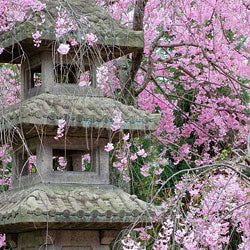
For the samurai lords who ruled Japan, the castles they created (jō, 城) stood as symbols of their wealth, power, and rule. More than mere military fortifications, castles served as administrative and cultural centers from which the Japanese arts were cultivated and refined. Ornate gold embellishment contrasted by the rustic simplicity of uniquely Japanese tea ware was a defining characteristic of the Azuchi-Momoyama period (1568-1600), named for the castles of Japan's first two unifiers: Oda Nobunaga (Azuchi-jō, 安土城) and Toyotomi Hideyoshi (Momoyama-jō, 桃山城) where these art forms were exemplified. Over 25,000 castles were built during the Sengoku period (1467-1615) that served as regional economic centers where the chōnin (町人, townsman) class grew as an economic force, broadening the base of the fine arts. Today, castles represent not only historical landmarks, but serve as regional symbols that embody Japan's rich cultural heritage.
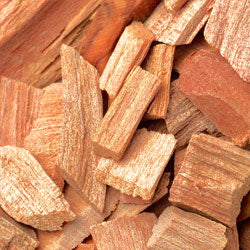
By intentionally combining the kanji for phoenix and castle together in naming its premium Hōjō (鳳城, Phoenix Castle) line, Yamadamatsu draws upon these two potent symbols of Japan. Part of Yamadamatsu's trifecta of Hōjō fragrances that include Hōjō White and Hōjō Green, Hōjō Red highlights the sweetness of the rarest kyara. Described as a "masterwork of fragrance," Hōjō Red combines world class kyara with aromatics that emphasize kyara's incomparably sweet fragrance, resulting in one of the finest examples of Japanese incense fit for the imperial court or the tenshu of the shōgun.
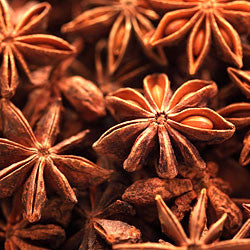
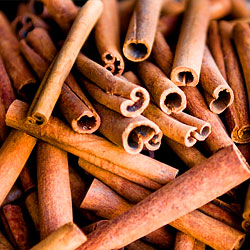
Hōjō Red's earthy brown stick is delicious. Spicy, sweet, with hints of sharpness and warmth, the unlit stick is a delight even without burning. The supporting aromatics shine in the anticipation, with notes of clove and cinnamon, both with sweet tones and fruity highlights, mixing with a rich warmth that is refined and elegant. Tying these notes together is a rich creaminess that floats between the various sweet, earthy, and fruity tones, harmonizing them in delightful balance of sweet and savory. But to experience the kyara at Hōjō Red's base, the stick must be lit.
Lighting the incense does not disappoint, as Hōjō Red begins with a burst of fragrance mixing sweet, savory, fruity, and floral tones bursting into and out of awareness like an excited kettle at full boil. All five tastes of the Gomi make their way to the fore, taking turns to rotate through sweet, salty, sour, bitter, and spicy. Deeply woody, Hōjō Red is as robust as ishigaki, the stone walls featured prominently in Japanese castle design, but yet at the same time there is a beauty and refinement that is soft and graceful like that of an Imperial courtier's brushstrokes. The initial presentation is one of a range of fragrances juxtaposing this show of strength and authority mixed with refinement and elegance, blending together to create a sweet and savory woody fragrance.
As the incense warms, Hōjō Red takes on a light spicy sweetness with a silky creaminess like a woody spicy chai tea. The sweetness becomes multi-faceted, with spicy sharp notes mingling with floral woody notes, all wrapped together in a lovely warmth that is powerful yet reserved, elegant, and soft. Every so often this sweetness drops away to showcase a quick note of earthy bitterness, rich, and almost damp in its depth, only to be followed with a quick hit of saltiness or a boisterous sour note, all rising and falling like a procession of nobility through the castles gates. Yet the fragrance seems to always return to the beauty of its woody floral sweetness adrift in silky gauze like sakura petals upon the breeze before castle gates receiving a parade of nobility.
The skill of Japanese incense houses like Yamadamatsu is on full display in Hōjō Red in the way its woody floral sweetness is highlighted through its contrasting notes. It's as if once a level of comfort is reached with Hōjō Red's sweetness, a salty note or a bitter note is produced that emphasizes its sweetness by the absence of it. Then as its woody sweetness returns to awareness its seems fuller, awareness heightened to its presence. That's true mastery of the art of incense.
In time, a breezy nature takes over as Hōjō Red expands, becoming ethereal and transparent. Where at first it was powerful and aggressively woody, with time the fragrance becomes softer, lighter, more translucent, like the refinement of the samurai as they transitioned from mere warlords to adopting and perfecting the ways of imperial courtiers. There is a powerful comfort and grace that develops the longer Hōjō Red fills the space, providing a feeling of calm and elegance, like being seated in a tatami room as a skilled tea master prepares tea for chanoyu.
Hōjō Red's after note continues this trend, becoming softer, silkier, and more translucent. Its woody sweetness shifts toward a floral nature tinged with a hint of fruity sweetness of petals in full bloom. The notes of clove and cinnamon from the unlit stick return to add an earthy spiciness to this sweetness that is delicious, yet softer than the unlit stick or the experience during its burning. Hōjō Red's after note is rich, full bodied, and long lasting.
In Hōjō Red, Yamadamatsu has created a beautiful fragrance that is alive and filled with a potent combination of great power and elegance; a fragrant embodiment of the phoenix and castle it is named for. Highlighting the woody sweet nature of kyara, Hōjō Red is elegant, complex, and exhibits a exquisitely masterful interplay of fragrance that is as rare as it is unique. With a superbly long lasting after-note, it would make a outstanding meditation incense, and is an absolute must for the Japanese incense connoisseur.
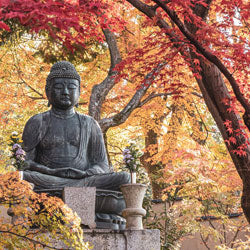
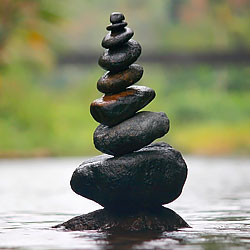
The boulder rests
Softened by time
Moss upon its head.

Hōjō Red is available in the following size:
55-stick kiri wood box
****
Learn more about the how the rule of emperor and samurai alike influenced the refinement of the Japanese art of incense in the book: The Fragrant Path: A Guide to the Japanese Art of Incense. Filled with practical suggestions, useful tips, and an exploration of the history, selection, use, and appreciation of this uniquely Japanese art form, The Fragrant Path offers a rare, comprehensive look into the Japanese art of incense in the first in-depth English-language book on the subject in nearly three decades.