Your Cart is Empty


As autumn approaches, the days grow shorter, the nights become longer, and a crispness fills the air. Tsukimi お月見 (moon viewing) is an autumn tradition with a rich history within Japanese culture that often informs the Japanese art of incense. In a practice that dates to the Nara and Heian periods, to celebrate the autumn moon, viewing parties are held where poetry is composed and the company of friends, fine food, wines, and jinkō enjoyed. One of the most famous Japanese Tsukimi poems is a 17th-century haiku by Matsuo Bashō entitled "From Time to Time":
雲をりをり 人をやすめる 月見かな
From time to time
The clouds give rest
To the moon-beholders.
Bashō's poem is a masterwork in that is encompasses aspects of moon viewing, Buddhism, and Zen in a single verse. Nobles and their poets would spend the entire night intensely contemplating the moon in hopes of arriving at the perfect verse that captured the full moon's beauty. Yet Bashō highlights the Zen concept of the clouds creating breaks of empty space by temporarily obscuring the view that allow the moon to reveal its full beauty. Such periods also provided onlookers a much needed rest from their active contemplation staring at the moon. Through this insight, Bashō illustrates that beauty is found in imperfection as the moon's beauty is enhanced precisely because the clouds serve to hide and reveal it, creating a constantly changing visage that is more alluring in its impermanence.
It is upon this inspiration that Kunmeido's Moon Waiting Clouds rests.
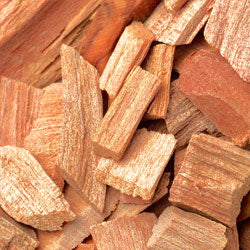
A very popular fragrance in Japan, Moon Waiting Clouds is described as "combining a sandalwood base of elegant sweetness and traditional depth with a refined Japanese perfume to create a unique fragrance with a traditional feel." Moon Waiting Clouds is a transitional incense - it lives is both the modern era where Western perfumes were introduced into the Japanese art of incense, yet does not abandon the woody base found traditionally in the art, moving seamlessly between both worlds like the clouds revealing a changing moon.
Moon Waiting Clouds' traditional green stick is robust - much thicker than a normal Japanese incense stick at a stout 3mm+. It's fragrance is immediately apparent when opening the box, with a rich perfume note mixed with a subtle greenness like summer sun dried fruits. A strong floral element bridges the space between these two notes, with a succulent musky quality like that of rich late blooming jasmine. The stick is fresh, alive, and filled with a refined feminine quality like the dignified wealth of the scented silk sleeves of a court noble.
Upon lighting, Moon Waiting Clouds' begins with an interesting sweetness that is sharp and tangy blended nicely with a perfumed top note. This is quickly offset by a rich woody note that is lightly bitter-sweet and sour. The two notes dance back and forth like the clouds passing before the moon, creating a powdery lightness that is at times sharp, others sweet, and yet others like the fresh morning dew upon jasmine, softly sweet with hints of fruity sourness.
With time, just like Bashō's poem, Moon Waiting Clouds' beauty is revealed in the blending of these various notes, creating one seamless experience encompassing each of them into one fragrance. As its disparate fragrant notes unify, Moon Waiting Clouds' turns silky, rich, with a soft sweet musk mixed with floral. Fruity notes bubble within this, creating a fragrance that is sophisticated, elegant, and refined. This is the stuff of that hearkens back to courtier's nights beneath the moon, searching for the words to describe a beauty that is indescribable.
As modern of a fruity-floral forward fragrance as Moon Waiting Clouds is, there is still a traditional element to it in the form of a distinct woodiness that runs beneath its fruity top notes. Unlike a pure modern floral incense, there is more than just floral notes waiting for the listener, but instead a firm base and tradition from which Moon Waiting Clouds' sweetness springs forth. Kunmeido describes Moon Waiting Clouds' base as sweet sandalwood, but there is often a distinct sourness to Moon Waiting Clouds' woodiness that perfectly contrasts the sweetness of its top note. But, much like the moon hidden behind the clouds, this note remains in the background, only occasionally peaking through to the forefront of its fragrance, thereby enhancing its beauty.
Taken together, there is a distinct beauty to Moon Waiting Clouds. It is floral, but yet not. It is sweet, but yet not. It is subtly woody, but yet not. It is, as highlighted in Bashō's verse on moon viewing, a beautiful fragrance because of its revealing of itself throughout the burn. At its start, sweet and fruity. Once warm, hints of sour woodiness. Over time, a building unity the grows into a fresh woody musky sweetness akin to fine jasmine. If it was all three of these at once for the entire burn it would be lesser, just as the moon alone on a clear night would not have the space needed to fully appreciate its beauty. Instead, Moon Waiting Clouds' true nature is revealed slowly, allowing the listener space to appreciate it fully.
Once the burn ends, Moon Waiting Clouds' fragrance quickly cools, with its perfume note becoming softer while its woody tones fade gently to memory. A light powdery sweetness remains, bit this note too quickly recedes. Moon Waiting Clouds is meant to be listened to while burning, its after note fading from the space like the moon disappearing behind autumn clouds.
Sweet and nostalgic, Moon Waiting Clouds is a wonderful combination of traditional and modern in a fresh rich fragrance. Soft and lightly sweet, Moon Waiting Clouds demonstrates that, like the moon, true beauty is best appreciated when revealed over time.
Autumn clouds part
revealing the moon's fullness,
pine shadows rising like ghosts.

Kunmeido Moon Waiting Cloud is available in the following sizes:
35-stick box
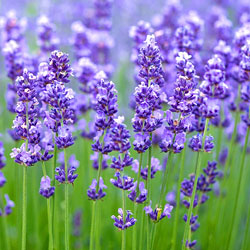
Moon Waiting Cloud Lavender adds an acidic quality to the mix in a lavender fragrance:
35-stick box
****
Learn more about the role moon viewing played in the Japanese art of incense in the book: The Fragrant Path: A Guide to the Japanese Art of Incense. Filled with practical suggestions, useful tips, and an exploration of the history, selection, use, and appreciation of this uniquely Japanese art form, The Fragrant Path offers a rare, comprehensive look into the Japanese art of incense in the first in-depth English-language book on the subject in nearly three decades.